
















Laser Cutting Machines & Industrial-Grade Connectors:
Amidst the dance of sparks lies an ultimate test of "stable connection." Every micron of cutting precision, each instance of robust and efficient operation, relies on a key component – the industrial-grade connector. So, is your laser cutting machine still being "hindered" by its connectors?
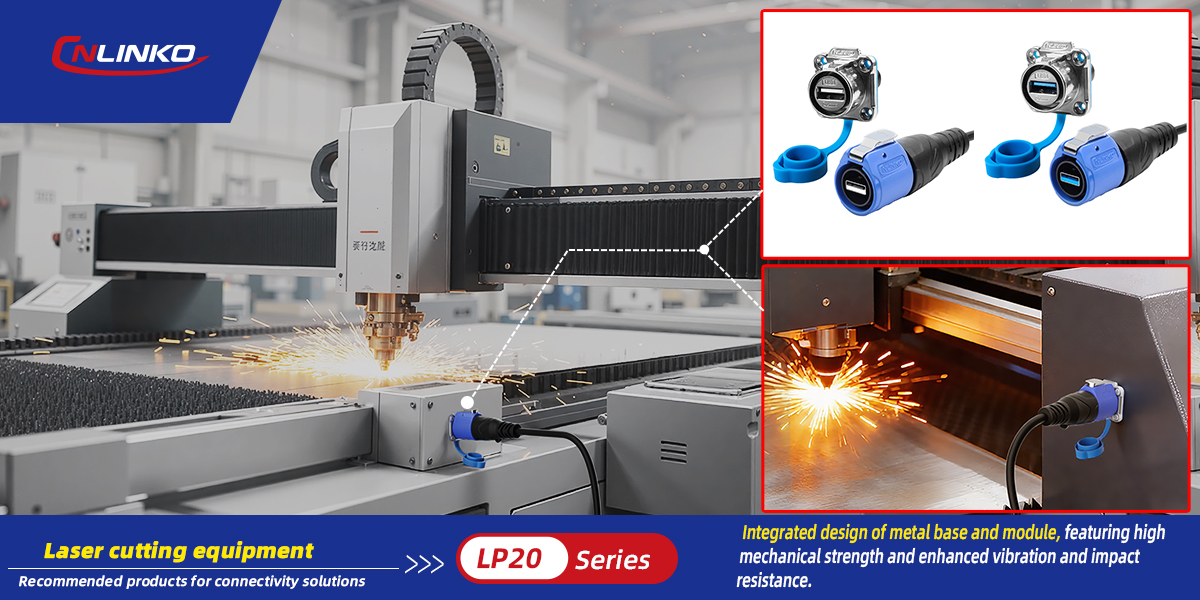
What Challenges Do Electrical Connections in Laser Cutters Face?
Laser cutting machines, embodying advanced laser technology, have become highly sought-after machining tools due to their fast, high-quality, and smooth cuts. They operate by emitting a high-power-density laser beam from the laser source, which interacts with the workpiece through relative movement to achieve cutting.
Laser cutting machines typically utilize USB ports and connectors. Their primary functions are: First, for transmitting cutting job file instructions; Second, to facilitate software maintenance and upgrades by service engineers, specifically for transferring device firmware or system software update packages. The USB connectors in laser cutters face numerous challenges from the environment and operation:
01. Vibration and Shock During Operation:
The high-speed movement of laser cutters generates intense vibration. Standard USB ports are prone to loosening, leading to transmission interruptions or poor contact.
02. High Temperatures Generated During Cutting:
The laser beam instantly melts and vaporizes materials (like metal), generating extremely high temperatures and radiant heat. Connectors are exposed to this high-temperature environment for extended periods.
03. Erosion of Internal Components by Water and Dust:
The air in laser cutting workshops contains metal dust, oil mist, coolant, and other contaminants. If these substances enter the USB port, they inevitably impair transmission performance and cause port corrosion.
04. High-Speed and Timely Data Transmission Requirements:
Modern high-end laser cutters require high-speed communication for multi-axis synchronous control. Insufficient transmission rates or low-quality, low-durability interfaces will affect the fluency and stability of data transfer.
The CNLINKO LP20-USB Metal Socket Precisely Meets Laser Cutter Connection Demands
The new CNLINKO LP20-USB connector features a metal socket with a unibody socket-module structure, offering greater overall strength and rigidity, making it better suited for laser cutter requirements. Its characteristics are as follows:
- High-Strength Zinc Alloy Housing, Unfazed by Machine Tool Vibration
Laser cutting machines generate continuous mechanical vibration during high-speed cutting. Vibration can cause momentary disconnections in standard connectors (e.g., brief data transmission interruptions), which is critical for precision control systems and laser output – potentially leading to substandard cuts or even scrap parts.
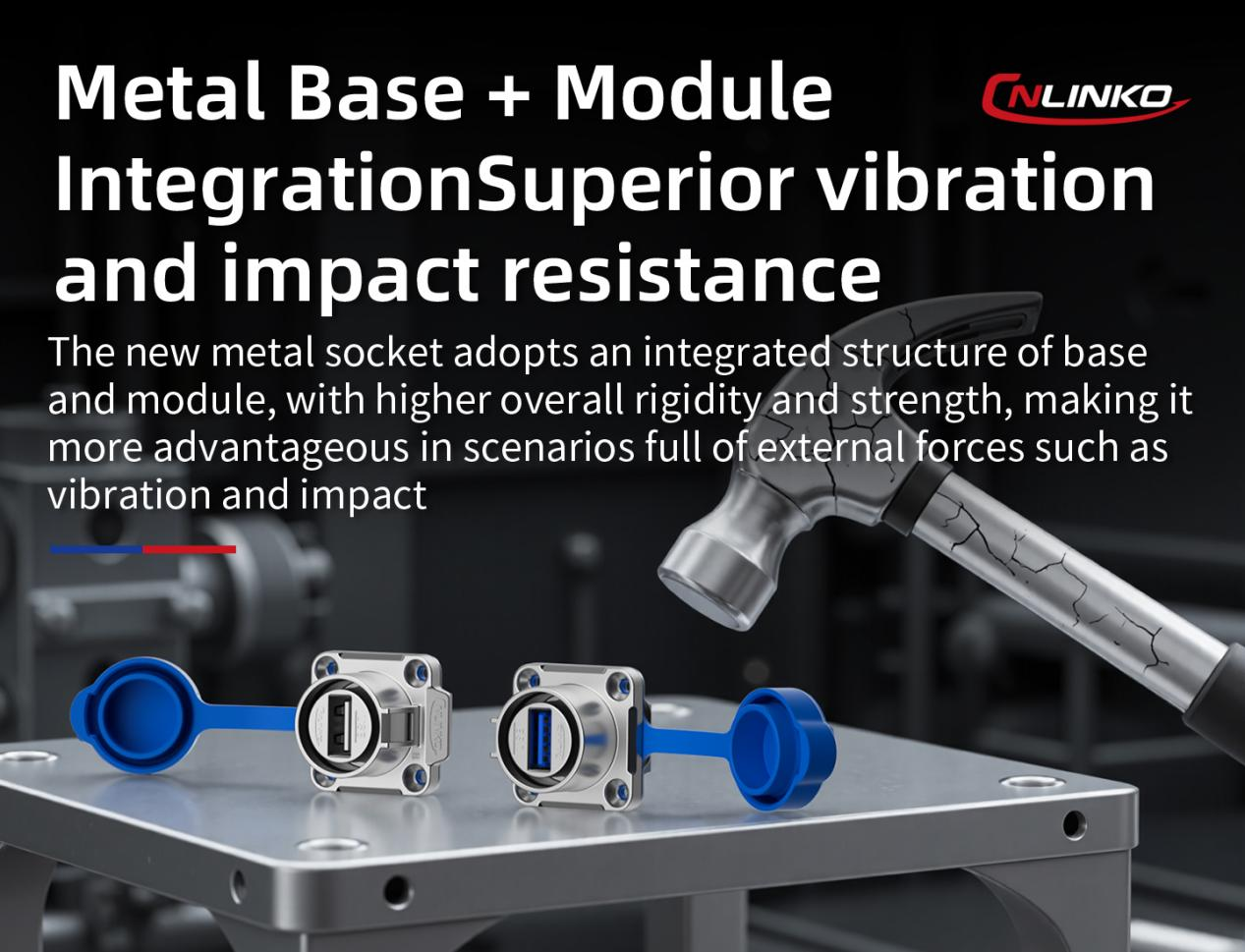
The CNLINKO LP20 series industrial USB metal socket, with its zinc alloy housing and unibody structure, is specifically built for this harsh operating condition. Its exceptional rigidity successfully neutralizes the connection risks posed by vibration and shock, ensuring the continuous and stable operation of the laser cutter.
2. Withstands Cutting Radiant Heat, Showcasing Connector Temperature Resistance
The high-energy-density laser beam generates extreme heat during cutting, accompanied by significant thermal radiation and spatter. This severely tests the high-temperature resistance of the connectors, particularly their housings.
The CNLINKO LP20 series excels in high-temperature performance. Both the all-metal socket and the matching plastic plug can withstand harsh temperatures up to +120°C, demonstrating stable performance when facing equipment heat radiation. Additionally, their high flame-retardant properties add another layer of reliable safety for the equipment.
- Flagship Protection Against Water & Dust, Unperturbed by Workshop Conditions
In laser cutting operation scenarios, liquids like coolant and dust particles from cutting and vaporization easily adhere to the connector socket and plug surfaces. If they seep into the connector interior, they can readily cause contact short circuits, corrosion, and rust.
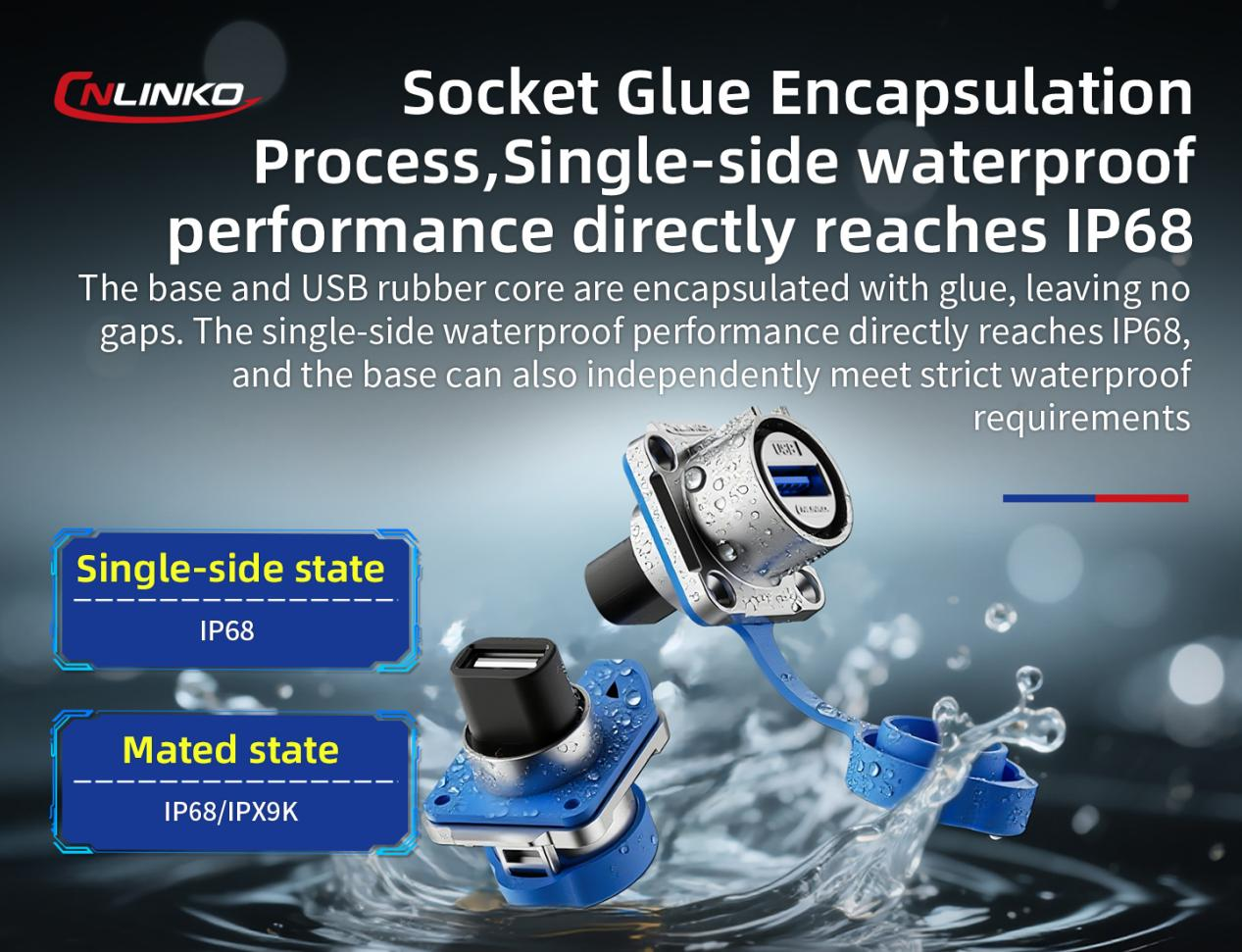
When the CNLINKO metal USB socket is used with its matching plug in the mated state, it provides IP68/IPX9K level protection, completely blocking the intrusion of surrounding metal dust and oily coolant. Furthermore, the socket alone achieves IP68 "single-sided water resistance," meaning the socket maintains high waterproof performance even when the plug is disconnected and the protective cap is not closed.
4. Gold-Plated High-Speed USB Port, Delay-Free Data Transmission
If the connector's speed is inadequate or the port quality is poor, it can easily cause instability and interruption in transmitting machining data, affecting the overall laser cutting quality and precision.
Both the CNLINKO LP20-USB metal socket and its matching plug utilize high-speed interfaces with 6μ" gold-plated contacts, ensuring reliable signal contact even in vibrating environments. They are available in both USB 2.0 (480 Mbps) and USB 3.0 (5 Gbps) specifications, guaranteeing high-speed, delay-free transmission whether handling large program files or real-time logs, thereby enhancing the laser cutter's production and operational efficiency.
In summary, the requirements for connectors in laser cutting equipment are comprehensively "high-spec." They must adapt to environmental demands while meeting speed requirements. The aforementioned CNLINKO connector products are exceptionally well-matched to the stringent transmission demands of laser cutter applications. We highly recommend keeping an eye on this product.