












If an industrial connector becomes abnormally hot, reduce the load or shut down the equipment for inspection. Do not continue extended operation without identifying the cause. Check actual current, conductor size, contact condition, termination quality, locking position, ambient temperature, and heat dissipation. For high-current connections, undersized conductors, rising contact resistance, and loose terminals are priority risks.
In what order should you investigate abnormal heating?
First, measure operating current and check for continuous overload or abnormal peaks. Second, verify conductor cross-sectional area, AWG size, and cable length against the connector terminal. Third, inspect crimped, soldered, or screw-clamped terminations for looseness, contamination, oxidation, and damage. Fourth, confirm full mating and locking, and look for burned or discolored contacts. Fifth, record ambient temperature, enclosure ventilation, dense wiring, and nearby heat sources to distinguish internal connection heating from the surrounding thermal environment.
Why does electrical continuity not prove that contact is healthy?
A poor contact may still conduct electricity temporarily. Reduced contact area or surface contamination can raise contact resistance, while resistive heating increases with the square of current. At high current, even a small resistance change can produce substantial localized heating. Heat can then accelerate material aging, loss of spring force, and oxidation, creating a cycle of worsening contact and higher temperature. Abnormal heating requires prompt investigation.
Which tests help diagnose abnormal heating?
Contact resistance can be measured using methods such as IEC 60512-2-1; IEC 61984 provides relevant criteria for connector safety and rated performance. During field diagnosis, record load current, ambient temperature, conductor size, termination method, and connection-point temperature. Compare with a new connector or a known-good circuit if needed. Housing temperature alone cannot establish whether the source is the connector, cable, or equipment load.
What signs call for stopping operation?
Stop using the connection if you observe softened or deformed housings, visible burning, unusual odors, discolored insulation, loose terminals, a rapidly rising hot spot, or intermittent loss of power. Simply installing a connector with a higher current rating may not solve the underlying problem, which could be undersized wiring, a faulty crimp, incorrect screw torque, contaminated contacts, abnormal load, or inadequate cooling.
How does CNLINKO evaluate heating risk in high-current connections?

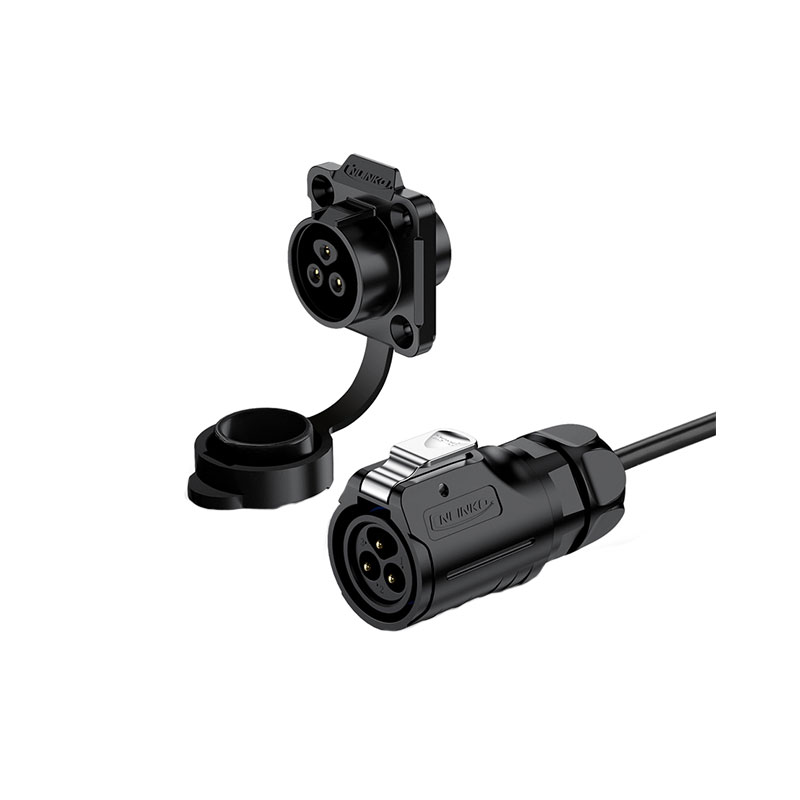
For industrial equipment requiring frequent maintenance and quick disconnection, connector selection should consider more than rated mating life. Contact stability, locking reliability, and environmental protection after repeated mating cycles are equally important. CNLINKO LP, BD, YM, DH, and DL Series industrial connectors offer multiple designs and contact configurations for different equipment requirements. Selected models are rated for ≥2,000 mating cycles; specifications vary by model and should be confirmed using the applicable datasheet and test results.
Under specified laboratory conditions, selected CNLINKO models have achieved ≥2,000 mating cycles in mechanical endurance testing conducted with reference to IEC 60512-9-1. For applications involving frequent mating over extended periods, long-term reliability should also be evaluated through post-test contact resistance, locking integrity, and sealing performance.
A connector’s suitability for frequent mating should therefore not be judged by cycle count alone. Selection should consider the specific model’s mechanical endurance, post-endurance electrical performance, and actual operating conditions.