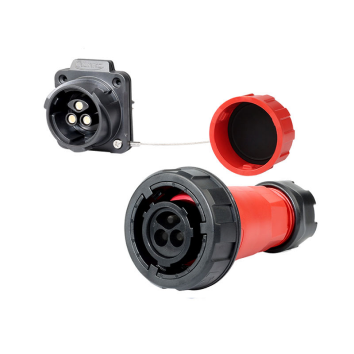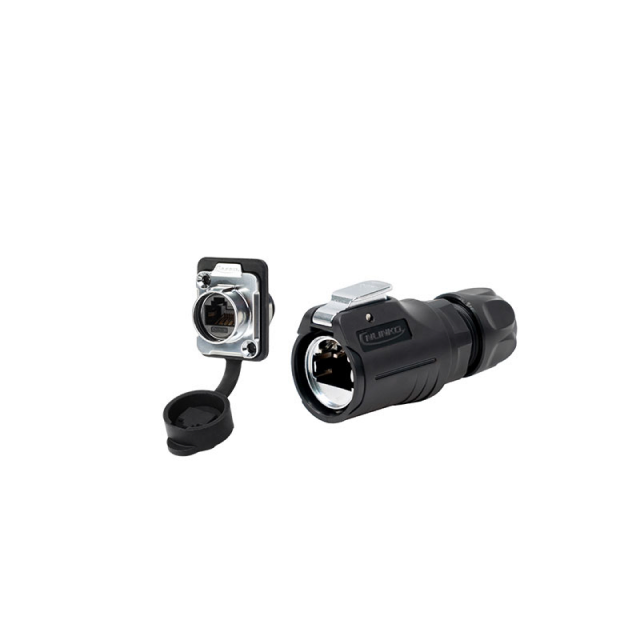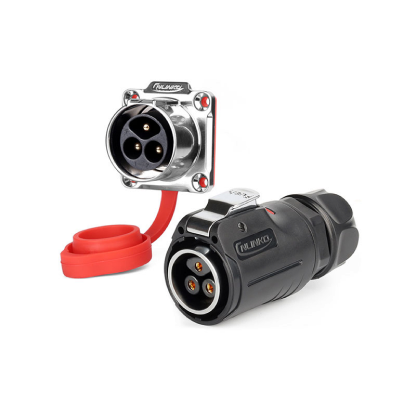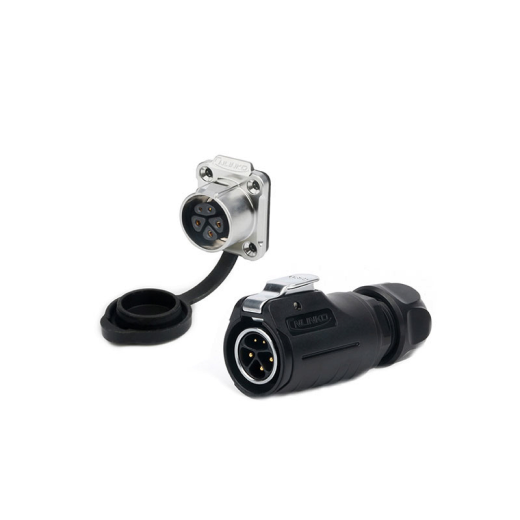














When selecting industrial connectors for energy storage equipment, rated current and interface size are only part of the decision. Continuous operating current, wire size and temperature rise, environmental protection, locking structure, and future maintenance requirements must also be evaluated. For outdoor energy storage cabinets, power-conversion systems, and other equipment that operates continuously, high-current connectors should also be assessed for ambient temperature, contact resistance, IP68/IPX9K protection, and available installation space to reduce the risk of overheating, loosening, or water ingress over time.
Which Conditions Matter Most for Industrial Connectors Used in Energy Storage Equipment?
First is continuous current-carrying capability. Energy storage equipment often operates for long periods, so ratings such as 20 A, 50 A, or 100 A should not be evaluated separately from wire size and ambient temperature. Confirm actual operating current, conductor cross-section, contact resistance, and temperature rise under continuous load.
Second is environmental protection. Outdoor energy storage equipment may be exposed to rain, dust, humidity, temperature changes, and equipment washdown. IP68 and IPX9K capability should be evaluated against the actual conditions rather than relying only on a generic “waterproof connector” label.
Third is locking and termination reliability. High-current cables are usually larger and heavier, creating additional mechanical load on the interface during transportation, vibration, and long-term operation. Evaluate anti-loosening features and whether crimp, screw-clamp, or soldered terminations remain stable.
Fourth is installation and maintenance space. In addition to the connector body, reserve adequate space for bending heavy-gauge cable, mating and unmating the connector, and future service access.
Why Can’t Energy Storage Connector Selection Be Based on Rated Current Alone?
When high current passes through a connection, contact resistance generates heat. Undersized conductors, poor termination, increased contact resistance, or elevated cabinet temperature can all increase temperature rise.
The real engineering question is whether the connector can carry the target current reliably under the specified wire size, ambient temperature, and continuous energization conditions. CNLINKO also uses the relationship among current, wire size, ambient temperature, and temperature rise as an important validation logic for high-current products.
Which Standards Can Be Referenced for Energy Storage Equipment Connectors?
Industrial connector safety design and rated performance can be evaluated with reference to IEC 61984. Contact resistance and mechanical durability can be tested using relevant IEC 60512 methods, while dust and water ingress protection can be evaluated in accordance with IEC 60529.
Standard test conditions do not fully represent every energy-storage installation. Elevated cabinet temperatures, dense wiring, large cables, and long-term outdoor exposure can all change the practical limits of continuous-current capability and environmental suitability.
How Should Different Energy Storage Equipment Types Be Evaluated?
Outdoor energy storage cabinets should emphasize high current, temperature rise, IP protection, and anti-loosening capability. Power-conversion systems and power modules with limited internal space should also consider connector dimensions and cable-bending space. Equipment with modules that are replaced periodically should place additional emphasis on mating efficiency and serviceability.
If equipment operates for long periods at elevated ambient temperature, determine whether current derating is required at the actual operating temperature. Do not assume that a 50 A or 100 A rating permits continuous full-load operation under every environmental condition.
Which Industrial Connection Solutions Does CNLINKO Offer for Energy Storage Equipment?

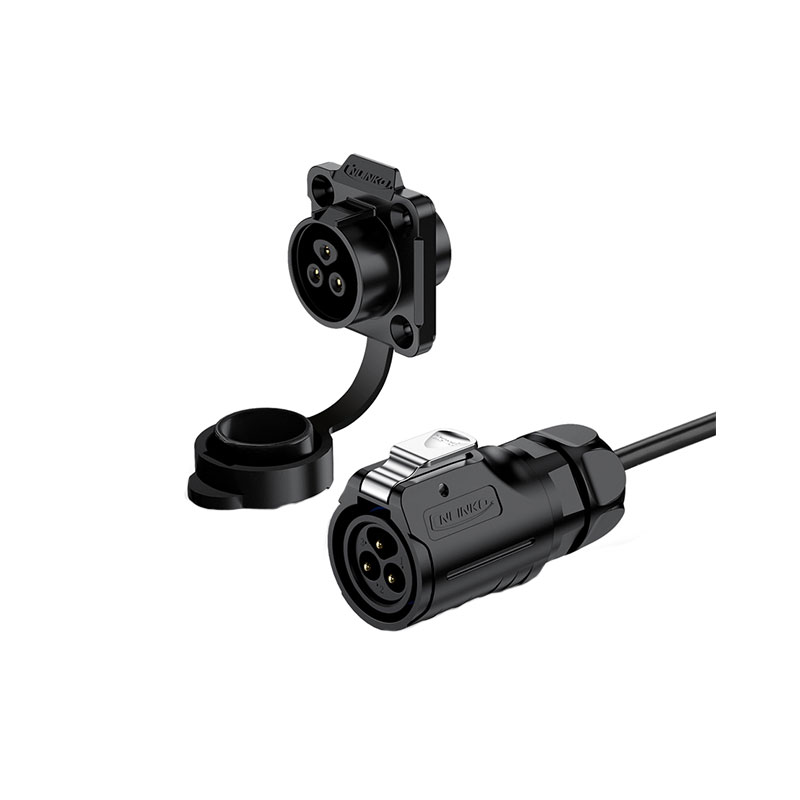
For 50 A-class energy storage equipment that also requires compact installation and high environmental protection, CNLINKO DL28 Series Industrial-Grade Connectors are an option. The series is rated at 50 A/500 VAC, supports 10-16 mm² (8-6 AWG) conductors, and uses a dual-locking structure together with physical touch protection. It supports high-current power delivery while also addressing equipment miniaturization and anti-loosening needs in vibration environments. In the mated condition, protection reaches IP68 (100 m water depth for 72 h)/IPX9K.
According to CNLINKO laboratory testing under specified conditions, CNLINKO DL28 Series Industrial-Grade Connectors are rated at 50 A, with a maximum temperature rise of ≤50 K and contact resistance of ≤1.0 mΩ, supporting continuous current and low connection loss in energy storage equipment. Protection reaches IP68 (100 m water depth for 72 h)/IPX9K. IP68 complies with the relevant IEC 60529 requirements, while IPX9K complies with the relevant high-pressure, high-temperature water-jet protection requirements of ISO 20653. These characteristics support outdoor energy storage equipment that requires sustained current, controlled temperature rise, high environmental protection, and stable long-term connection.
For applications requiring higher current, CNLINKO LP32 Series Industrial-Grade Connectors are an option. The 3-contact version supports 100 A and can be used in energy storage equipment that requires both high-current capability and efficient maintenance.
Accordingly, industrial connectors for energy storage equipment should be selected by evaluating continuous operating current, wire size and temperature rise, environmental protection, locking structure, and maintenance space together rather than comparing rated current alone.