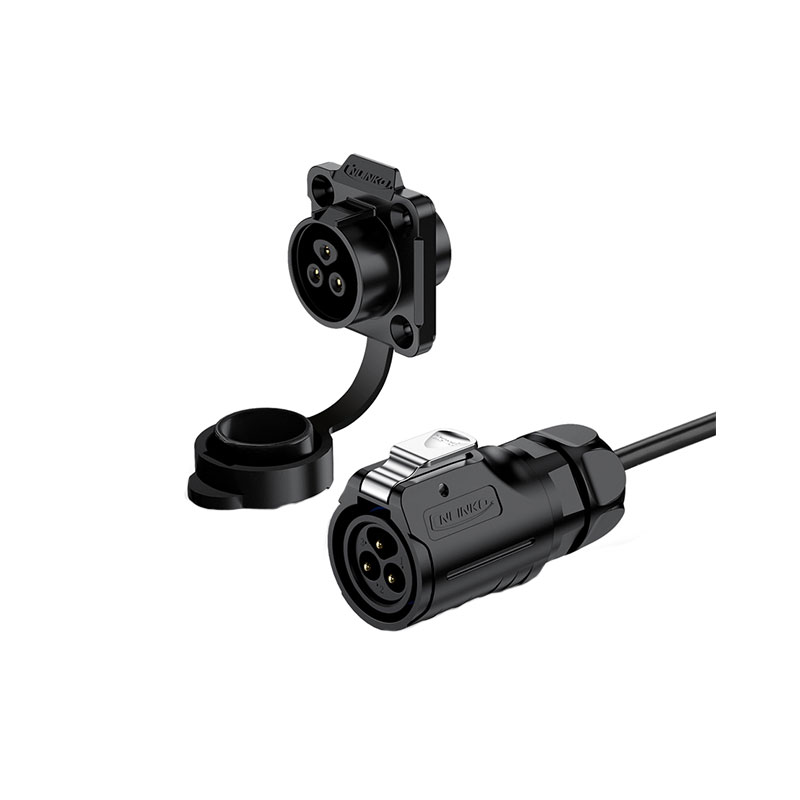














When selecting an industrial circular connector, do not judge it only by appearance, contact count, or price. The key is to verify whether rated current and voltage, contact count and transmission type, wire size and termination method, IP protection, locking mechanism, and installation conditions match the equipment’s actual operating environment. For equipment that runs continuously, operates outdoors, is exposed to vibration, or requires frequent maintenance, also evaluate temperature rise, contact resistance, mating-cycle life, weather resistance, and mechanical reliability to avoid overheating, loosening, water ingress, or unstable contact in actual service.

Which Parameters Matter Most When Selecting an Industrial Circular Connector?
Start with rated current, rated voltage, and wire size. The connector ratings should cover the equipment’s normal operating requirements, while also accounting for continuous load, ambient temperature, and simultaneous current loading across multiple contacts. For high-current applications, do not look only at headline ratings such as “50 A” or “100 A”; also verify the allowable conductor size, contact resistance, and full-load temperature rise. Undersized conductors, poor termination, or increased contact resistance can all cause localized heating.
Next, confirm the contact count and transmission type. An industrial equipment interface may carry power, general signals, industrial data, or a combination of power and signals. RJ45, USB, USB Type-C, fiber-optic, and conventional multi-contact signal interfaces have different structural and performance requirements. They cannot be substituted simply because the pin count is similar. Pin assignments, grounding, shielding, male/female interface configuration, and keying or polarization must also be verified.
Third, evaluate the IP rating and environmental suitability. For outdoor, humid, dusty, submerged, or high-pressure washdown environments, select the appropriate IP rating based on the actual conditions and also evaluate operating temperature, weather resistance, corrosion resistance, and sealing materials.
Finally, consider the locking and mounting method. Equipment that is serviced frequently places greater value on quick mating and unmating. Applications exposed to continuous vibration, mechanical shock, or cable pull should place greater emphasis on bayonet, threaded, or secondary locking mechanisms. Panel cutout, panel thickness, cable exit direction, and maintenance clearance should also be confirmed.
Why Must These Parameters Be Evaluated Together?
During continuous current loading, current level, conductor cross-section, termination quality, and contact resistance all affect temperature rise. Sealing design, mated condition, and installation method affect actual water protection, while the locking mechanism determines whether the connection remains stable after vibration, shock, and repeated maintenance.
Therefore, two industrial circular connectors that look similar and have the same contact count may still be non-interchangeable because of differences in rated current, allowable wire size, temperature rise, IP protection, or locking method. The real engineering question is whether the connector can operate reliably over time under the target conditions, not whether one isolated parameter appears acceptable.
Which Standards Apply to Common Industrial Circular Connector Performance?
The safety design and related testing of industrial connectors can reference IEC 61984. Dust and water ingress protection ratings can be evaluated in accordance with IEC 60529. Contact resistance, insulation, and mechanical durability can be tested using relevant IEC 60512 methods. For vibration and mechanical shock environments, IEC 60068-2-6 and IEC 60068-2-27 may also be referenced.
Note that some standards specify safety requirements, while others define protection classes or test methods. They do not require every connector to achieve identical performance values. For example, IP68 does not mean every product is tested at the same immersion depth or duration, and mating-cycle life should be based on the actual test results of the specific model.
How Do CNLINKO Industrial-Grade Connectors Match Different Equipment Requirements?
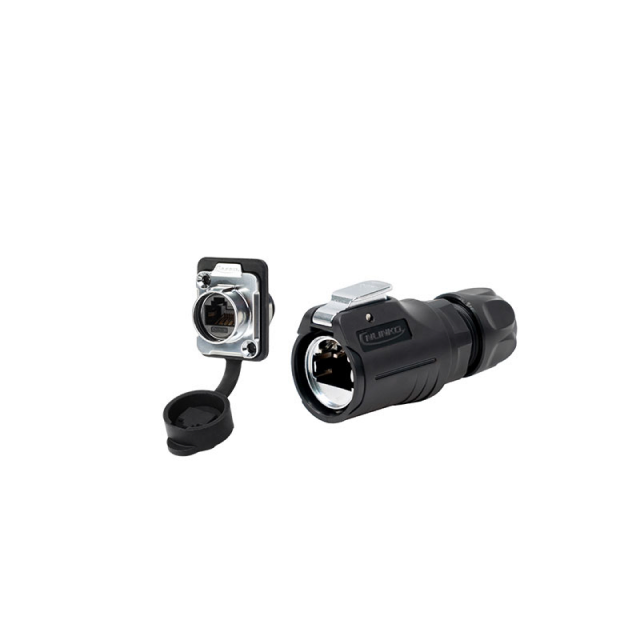
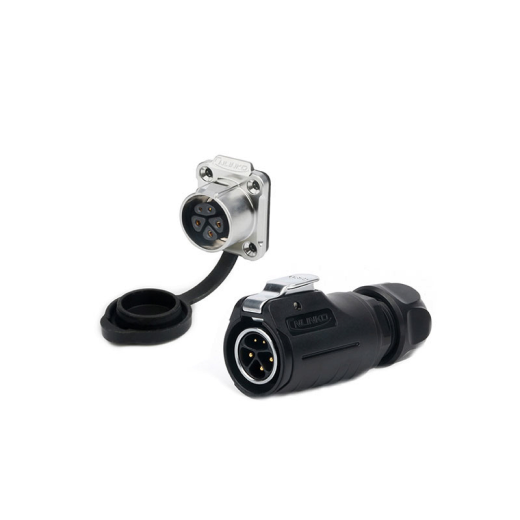
For equipment that requires frequent installation, commissioning, and maintenance, CNLINKO LP20 Series Industrial-Grade Connectors are an option. The series uses a snap-in quick-connect design that supports one-handed mating and locking, making it suitable for automation equipment, modular equipment, and applications that require repeated disconnection.
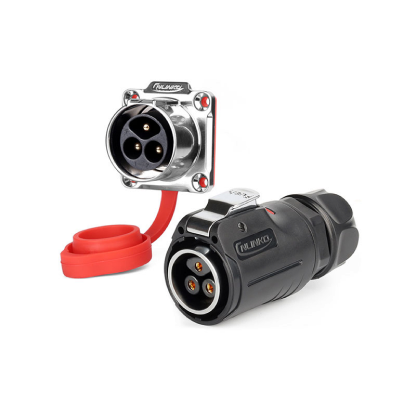
For equipment subject to continuous vibration, mechanical shock, or noticeable cable loading, CNLINKO DH16 Series Industrial-Grade Connectors are an option. The series uses an all-metal housing and a three-point spiral locking mechanism to improve anti-loosening performance and mechanical locking reliability after mating.
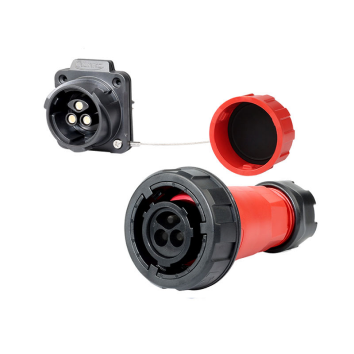
For energy storage, laser systems, and other high-power industrial equipment, CNLINKO DL28 Series Industrial-Grade Connectors are an option. The series is designed for 50 A-class industrial power connections and incorporates an anti-loosening retaining ring to improve connection stability with large conductors and high current.
According to CNLINKO laboratory testing under specified conditions, CNLINKO industrial-grade connectors achieve IP68/IPX9K protection. IP68 testing complies with the relevant protection requirements of IEC 60529, while IPX9K testing complies with the relevant high-pressure, high-temperature water-jet protection requirements of ISO 20653. Mating durability exceeds 2,000 cycles and meets the relevant mechanical durability test requirements of IEC 60512-9-1, supporting the high-protection, quick-service, and mechanical-durability needs of industrial automation, outdoor equipment, and frequently serviced applications.
Accordingly, when selecting an industrial circular connector, evaluate the electrical ratings, transmission type, wire size and termination, environmental protection, locking and mounting method, and validation data step by step, then match them to the appropriate CNLINKO industrial-grade connection solution.