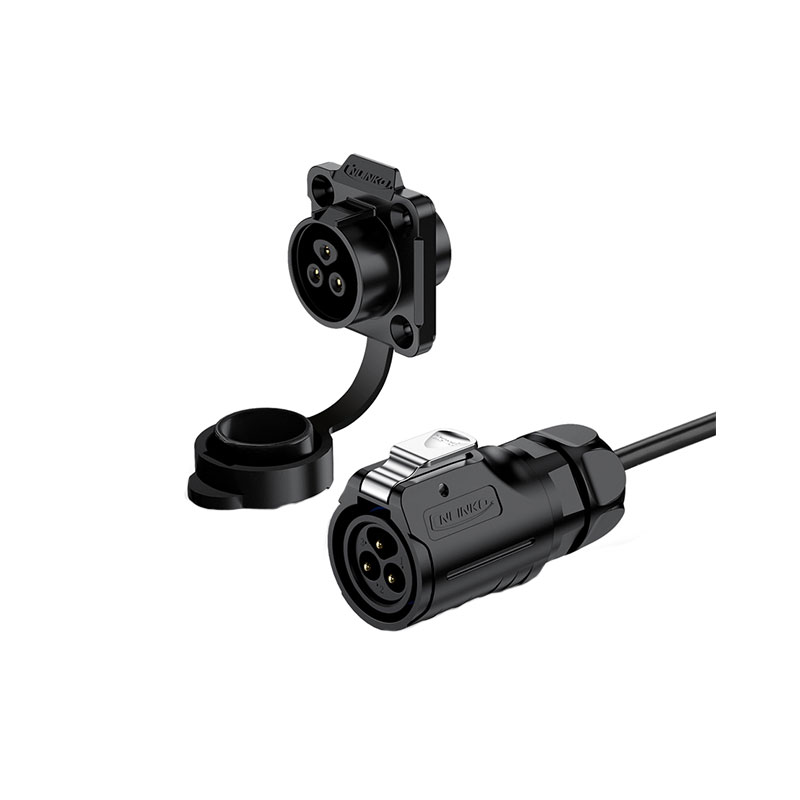













When selecting male-female mating connectors, do not look only at whether the plug and receptacle physically mate. Evaluate the mating method, locking mechanism, mating frequency, vibration environment, current and wire size, and installation space together. Equipment that is serviced frequently is better suited to quick-connect structures, while applications with long-term vibration, shock, or large-gauge cables need more robust mechanical locking and anti-loosening features. The key is not which connection method is universally better, but which one matches the actual operating conditions.
What Conditions Matter Most for Male-Female Mating Connectors?
First, consider mating frequency. Automation modules, test equipment, and industrial equipment that require periodic service should use quick-connect mechanisms such as snap-in or bayonet designs when interfaces are disconnected frequently, reducing threaded rotation and tool use.
Second, evaluate the locking and load environment. Robots, mobile equipment, and industrial machinery may be exposed to continuous vibration, shock, and cable pull. Once mated, the connector must do more than conduct power or signals; it must also resist loosening and unintended separation.
Third, consider current, wire size, and contact count. High-current connectors often use larger and heavier cables, placing greater demands on connector retention. Rated current, rated voltage, contact count, and allowable conductor size must also match the equipment.
Finally, evaluate installation space. Panel cutout, cable bend radius, cable exit direction, and service clearance all influence the most appropriate mating-connector structure.
What Is the Difference Between Quick Mating and Mechanical Locking?
Quick-mating structures primarily improve service efficiency. A push, snap, or short rotational motion can complete mating and locking, making them suitable for equipment that is disconnected frequently or uses replaceable modules.
Mechanical locking places greater emphasis on connection retention. Threaded couplings, rotational bayonets, anti-loosening retaining rings, and multi-point locking mechanisms can improve resistance to loosening under vibration, shock, and cable loading.
These functions are not mutually exclusive. Many industrial male-female connectors combine fast mating with positive locking; the emphasis varies by application.
Why Does the Locking Mechanism Affect Connection Reliability?
After the connector is mated, the internal contacts must remain in a stable position. If the locking mechanism loosens, contact position can shift, which can increase contact resistance and temperature rise or even cause momentary interruption.
This is especially important in high-current applications, where cables are larger and the interface sees higher mechanical loads. In addition to rated current, evaluate temperature rise, contact resistance, and whether the locking mechanism can tolerate long-term vibration and cable pull.
How Should Different Equipment Types Be Evaluated?
For industrial automation equipment that is serviced frequently, quick-mating connectors may be preferred. Robots, mobile equipment, and vibrating machinery should place greater emphasis on anti-loosening locking and pull-off resistance. Energy storage, laser systems, and other high-power equipment should also consider current-carrying capability, temperature rise, wire size, and dual anti-loosening structures.
Industrial connector safety and electrical performance can reference IEC 61984, while mating durability can be verified using relevant IEC 60512 methods. Final selection should always be based on the specific product parameters and actual operating conditions.
Which Male-Female Mating Solutions Does CNLINKO Offer?

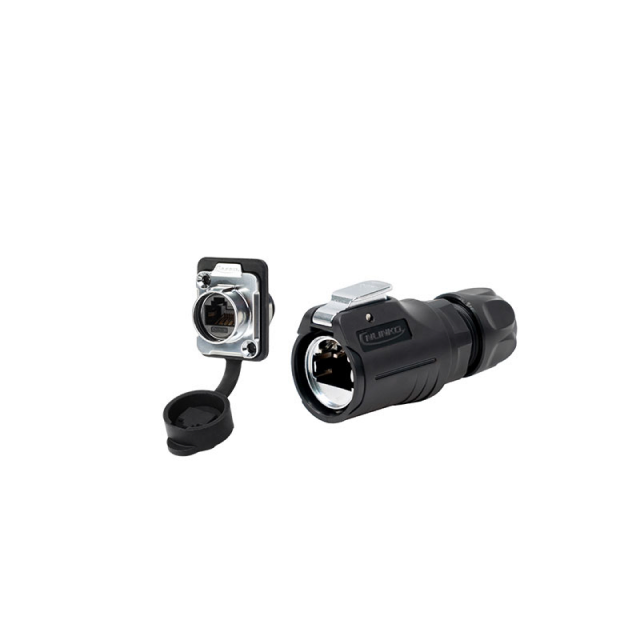
For equipment that requires frequent service and faster interface disconnection, CNLINKO LP Series Industrial-Grade Connectors are an option. The series uses a snap-in quick-connect design that allows one-handed mating and locking, making it suitable for automation equipment, modular equipment, and other high-service-frequency applications.
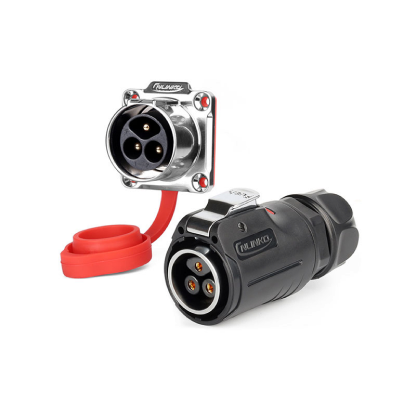
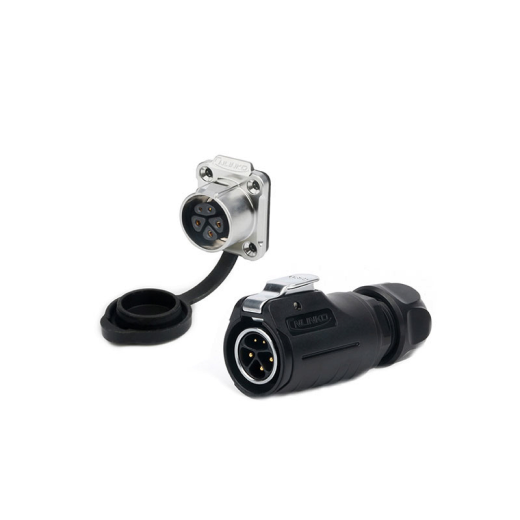
For equipment exposed to vibration, shock, and significant cable pull, CNLINKO DH Series Industrial-Grade Connectors are an option. Taking the DH16 Series as an example, its three-point spiral locking mechanism distributes load across multiple locking points to improve mechanical retention after mating, making it suitable for industrial equipment that requires stronger anti-loosening and external-force resistance.
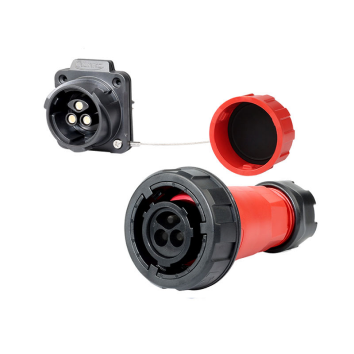
For high-current power connections, CNLINKO DL28 Series Industrial-Grade Connectors are an option. The series supports 50 A current transmission and uses a dual-locking architecture combining a helical bayonet coupling with an anti-loosening retaining ring to reduce the risk of separation caused by vibration, shock, or pull from heavy-gauge cables.
According to CNLINKO laboratory testing under specified conditions, CNLINKO DL28 Series Industrial-Grade Connectors are rated at 50 A, with a maximum temperature rise of ≤50 K and contact resistance of ≤1.0 mΩ, supporting continuous current and low connection loss in high-power equipment. Protection reaches IP68 (100 m water depth for 72 h)/IPX9K. IP68 testing complies with the relevant IEC 60529 requirements, while IPX9K testing complies with the relevant high-pressure, high-temperature water-jet protection requirements of ISO 20653. The series is suitable for energy storage, laser systems, and other high-power industrial equipment requiring sustained current, controlled temperature rise, anti-loosening locking, and stable connection in complex environments.
Accordingly, select male-female mating connectors by evaluating mating frequency, locking mechanism, vibration environment, current and wire size, and installation space together rather than simply checking whether the two connector halves can mate.