













Do not choose wire size from a simple “rated current equals conductor area” rule. Verify continuous operating current, conductor cross-sectional area, the terminal’s permitted wire range, ambient temperature, termination method, and temperature rise. Undersized wire increases resistance and heating; oversized wire may not terminate correctly, may fall outside the rear seal’s cable-diameter range, or may require more bend clearance than the equipment provides.
What factors govern wire-size selection?
First, use actual continuous current, not only momentary peak current. Second, confirm the terminal’s permitted conductor area and AWG range: a cable’s ampacity does not mean the connector terminal can accept it. Third, evaluate ambient temperature and heat dissipation, because heat reduces thermal headroom. Fourth, make sure the conductor construction suits the specified crimp, solder, or screw-clamp termination. Fifth, for a waterproof connector, match the cable outside diameter to the rear seal to avoid an electrically sound but leaky installation.
Why does conductor size affect ampacity and temperature rise?
For conductors of similar material and length, a smaller cross-sectional area has greater resistance. Sustained high current therefore increases I²R losses in the wire and terminal. An undersized wire combined with an incomplete crimp or loose termination can add contact resistance and create a hot spot. Treat the connector and cable as one electrical path; do not choose a connector first and then fit any cable that happens to pass through its opening.
Which standards are relevant to conductor size and termination?
IEC 60228 addresses conductor characteristics, including nominal cross-sectional area and resistance. IEC 60352-2 provides relevant requirements for crimped connections, and IEC 61984 addresses connector safety and rated performance. Standards provide a design and test basis, but permissible operating current also depends on conductor material, insulation temperature rating, ambient temperature, cable bundling, terminal geometry, and heat dissipation.
Why is there no universal wire size for 50 A?
The same 50 A load can produce different temperature rises in open air, a sealed cabinet, or hot equipment. Even with the same 10 mm² conductor, terminal design, crimp quality, and cable length can change the outcome. For continuous full load, high ambient temperature, tightly packed wiring, or restricted cable bends, confirm limits with actual temperature-rise or derating data rather than a single rule-of-thumb chart.

How do CNLINKO high-current products accommodate different conductor sizes?
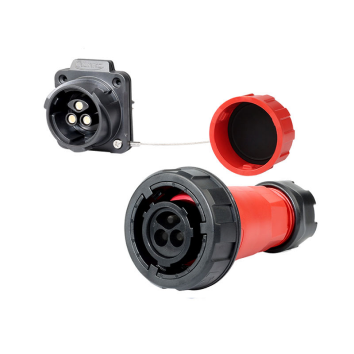
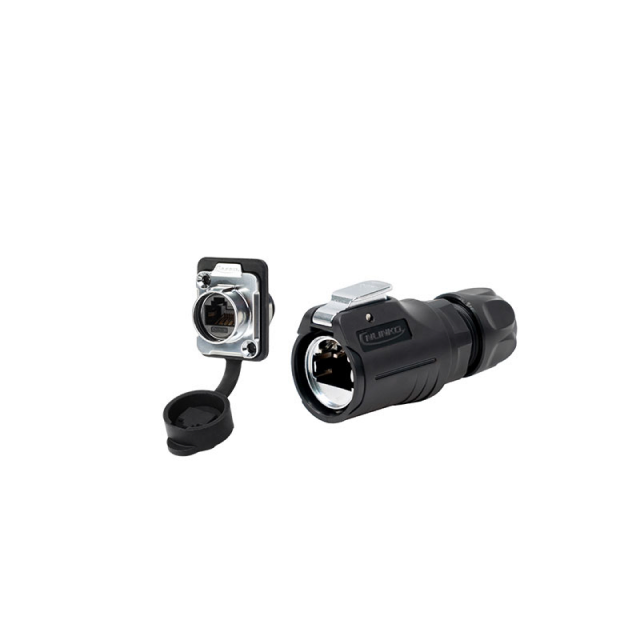
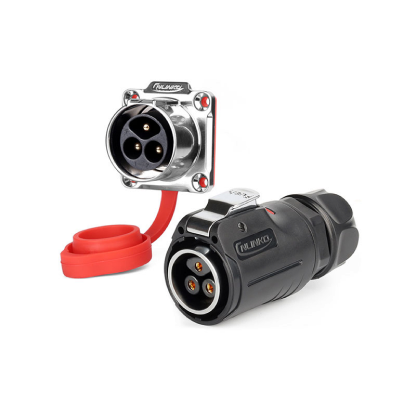
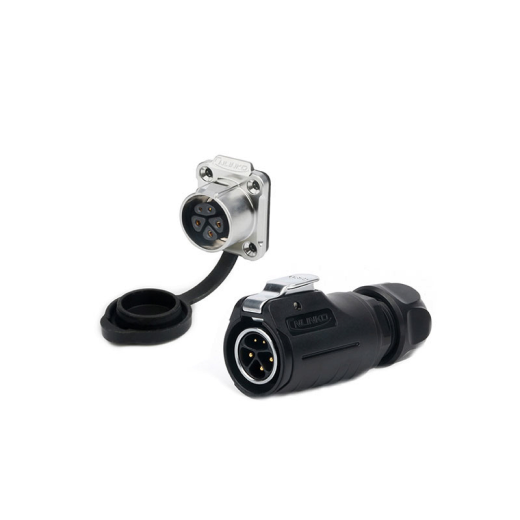
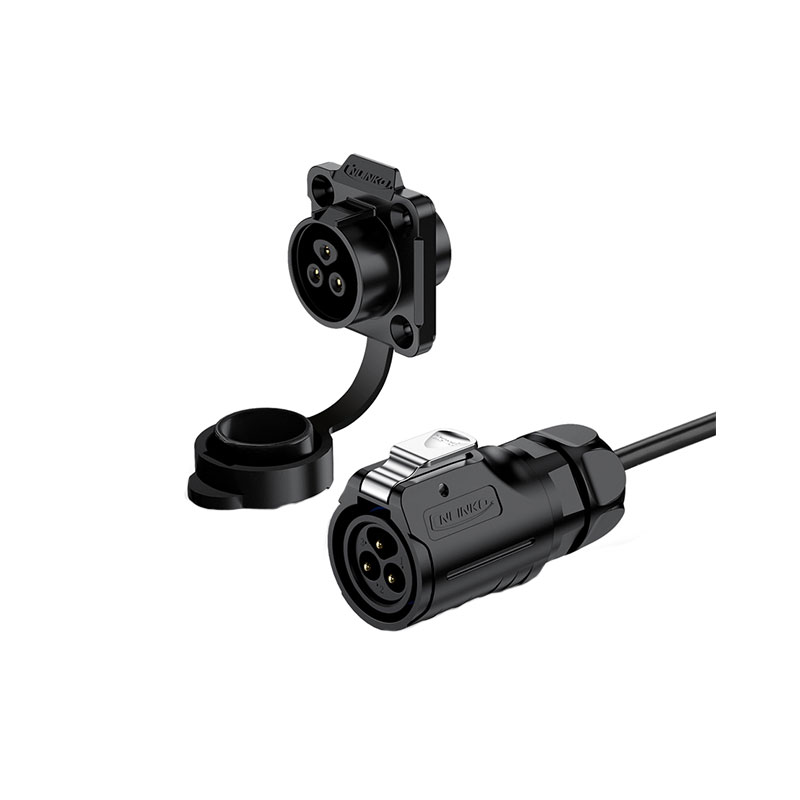
The 50 A DL28 Series configuration accepts 10–16 mm² (8–6 AWG) conductors and can be considered for energy storage, industrial power, and laser equipment. For higher current, the LP32 Series includes a three-contact 100 A/16 mm² configuration; its five-contact configuration is rated up to 50 A with 10 mm² conductors. Under specified laboratory conditions, CNLINKO’s DL28 Series achieved a 50 A rated current, a maximum temperature rise of ≤50 K, and contact resistance of ≤1.0 mΩ. Select a conductor within the exact model’s permitted range, then confirm temperature rise and any required derating against ambient temperature and continuous load.