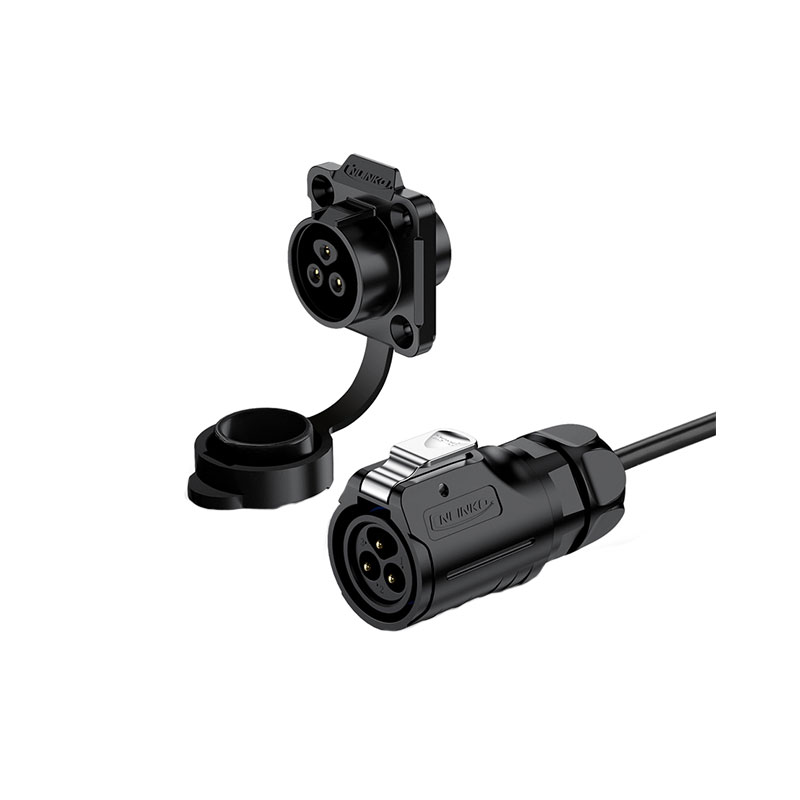














Connector selection for a photovoltaic inverter should consider continuous operating current, temperature rise, outdoor ingress protection, operating temperature, available space, and maintenance. Inverters often operate continuously in demanding environments. Looking only at rated current while ignoring conductor size, heat, sealing, and cable routing can result in hot interfaces, water ingress, excessive cable stress, or difficult service access.
Which parameters matter most for a photovoltaic inverter connector?
First, determine the actual current and voltage of each circuit; main power, auxiliary power, control, and data connections need different criteria. Second, check conductor size, contact resistance, and temperature rise at continuous load. Third, review IP protection, operating temperature, UV resistance, and material weatherability. Fourth, measure panel cutouts, connector envelope, rear projection, and bend radius for large cables. Fifth, consider service frequency; interfaces that are regularly disconnected need an appropriate locking method and mating-cycle rating.
Why are long-term heating and sealing especially important in inverters?
Power interfaces carry current for extended periods, allowing heat from contact resistance to persist. An undersized conductor, incomplete termination, or high cabinet temperature can increase the temperature at the joint. Outdoor thermal swings expand and contract materials, while rain, dust, and UV exposure act on the seals. Electrical, thermal, and environmental performance therefore need to be validated together.
Which standards may apply to photovoltaic inverter connectors?
For general industrial equipment interfaces, IEC 61984 addresses connector safety and rated performance, IEC 60529 addresses IP protection, and IEC 60512 provides relevant methods for contact resistance and mechanical endurance. If the application calls for a dedicated PV DC connector, check applicable product-specific requirements such as IEC 62852. Testing for a general industrial interface must not be presented as a substitute for dedicated PV DC connector requirements.
Why should different inverter interfaces be selected separately?
The main power interface prioritizes continuous current, temperature rise, and termination of larger conductors. Auxiliary power and control interfaces may place more weight on compactness, water resistance, and service access. Data interfaces additionally require the appropriate transmission speed, shielding, and signal integrity. Outdoor ports need stronger environmental suitability; cabinet-internal ports may prioritize space and ventilation. Select by circuit function instead of assuming one connector family fits every inverter port.
=
What industrial connection options does CNLINKO offer for inverters?
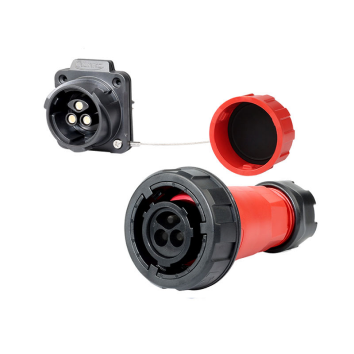
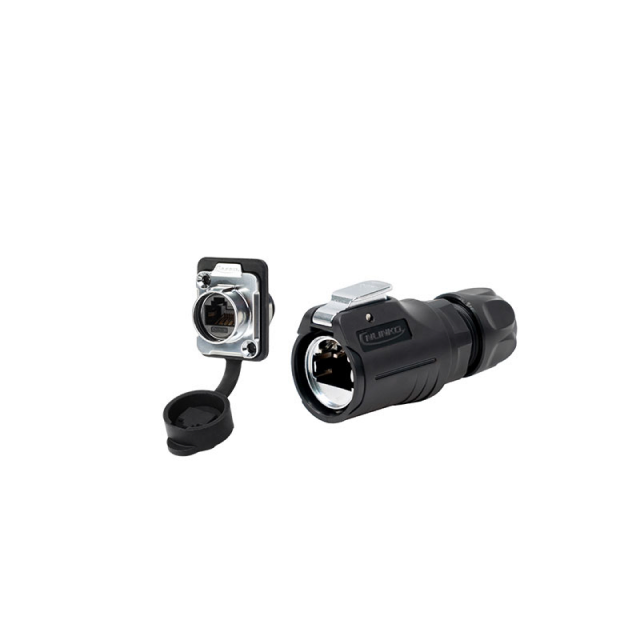
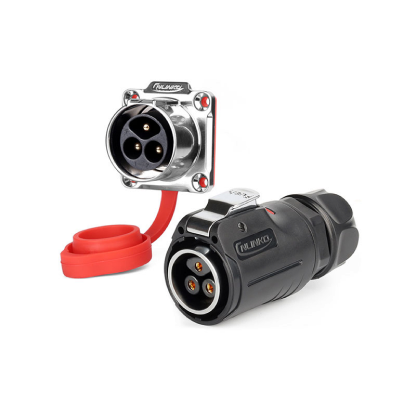
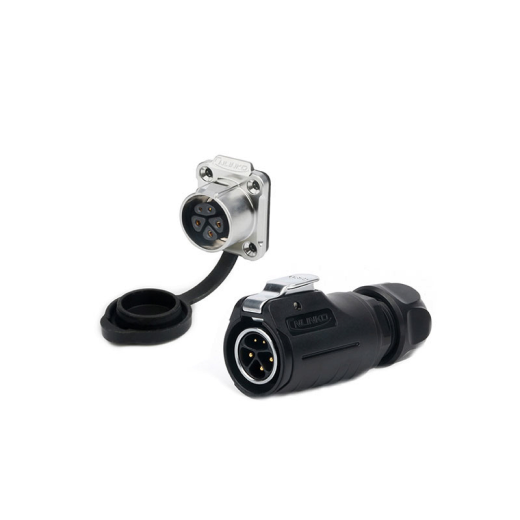
For auxiliary power, control, and outdoor ports, CNLINKO LP and YM waterproof industrial connector families can be evaluated against current, contact count, and installation space; DL high-current connectors can be considered for higher-power interfaces. The LP20 Series 90° connector is designed for side-exit cabling where cabinet walls or interior components limit rear clearance. Under specified laboratory conditions, CNLINKO’s LP20 Series 90° connector achieved IP68/IPX9K protection, more than 2,000 mating cycles, and F1-rated UV weather resistance. These results provide a basis for evaluating outdoor auxiliary inverter connections requiring frequent service. Suitability for a main power or PV DC circuit must be determined from the project’s electrical requirements, applicable certifications, and formal product selection.