













There is no universally best termination method for industrial connectors. The choice should be based on current and wire size, production volume, vibration environment, field-service requirements, and available installation space. Solder termination is suitable for compact structures, lower-volume assembly, or multi-contact signal connections. Crimp termination is better suited to volume production, cable-harness manufacturing, and applications that require strong process consistency. Screw-terminal termination is flexible and convenient for field installation and maintenance and is often suitable for medium- to large-gauge power conductors, but tightening torque must be controlled carefully.
Which Conditions Matter Most When Selecting an Industrial Connector Termination Method?
First, consider current and wire size. Small-gauge conductors and multi-contact signal connections can use solder termination. For larger conductors and higher current, pay closer attention to contact resistance, terminal retention, and temperature rise after crimp or screw-terminal termination.
Second, consider production volume. Volume cable-harness production places greater emphasis on process consistency. When the correct terminal and tooling are used, crimping is well suited to standardized manufacturing.
Third, consider vibration and cable loading. Robots, construction machinery, and similar equipment should be evaluated for mechanical retention and electrical stability after vibration and cable pull.
Fourth, consider maintenance requirements. Equipment that must be wired or re-terminated in the field often benefits from screw-terminal connections, while fixed, high-volume cable assemblies are generally better suited to crimp termination.
What Are the Characteristics of Solder, Crimp, and Screw-Terminal Termination?
Solder termination creates an electrical connection between the conductor and terminal using solder. It is compact and works well for multi-contact connections, but it requires careful control of soldering temperature, solder volume, and operator technique. Excessive heat or a cold/insufficient solder joint can reduce consistency.
Crimp termination creates a stable electrical connection by mechanically compressing the terminal around the conductor without solder. It is well suited to automated processes and volume cable-harness production. Its advantages include high throughput and good consistency, but the terminal, wire size, and crimp tooling must be correctly matched. Under-crimping or over-crimping can reduce reliability. IEC 60352-2:2024 specifies general requirements, test methods, and engineering guidance for solderless crimped connections.
Screw-terminal termination mechanically clamps the conductor and is convenient for field installation and maintenance, especially with larger conductors. However, insufficient tightening torque can increase contact resistance, while excessive torque can damage the conductor. IEC 60999-1 includes relevant safety requirements for screw-type and screwless-type clamping units for copper conductors within its specified scope.
Why Does the Termination Method Affect Connector Reliability?
Current in an industrial connector ultimately flows through the path from conductor to terminal to contact. Poor termination increases contact resistance and can further increase temperature rise at high current. Cable pull and equipment vibration can also loosen the terminal. Termination therefore should not be selected only for assembly convenience; contact resistance, pull-out force, temperature rise, and post-vibration connection condition should also be validated.
How Should Different Equipment Types Be Evaluated?
Solder termination can be preferred for multi-contact signals and lower-volume assembly. Crimp termination is well suited to automated cable-harness production, volume equipment, and vibration-prone applications. Screw-terminal termination can be considered for energy storage, laser systems, power equipment, and other applications that require field wiring or use larger conductors.

These guidelines should not be applied mechanically. High current does not mean screw terminals are the only option; crimp termination can also be used with large-gauge conductors. Final selection should be based on the conductor sizes supported by the product, terminal design, and actual assembly process.
Which CNLINKO Industrial Connection Solutions Support Different Termination Methods?
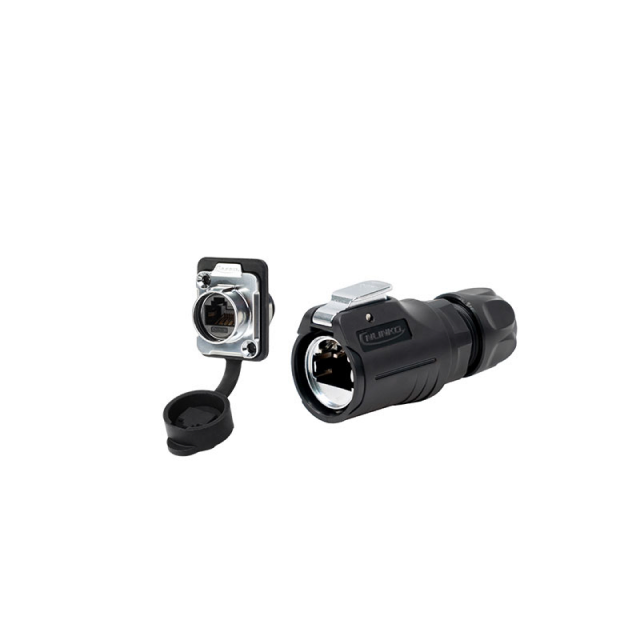
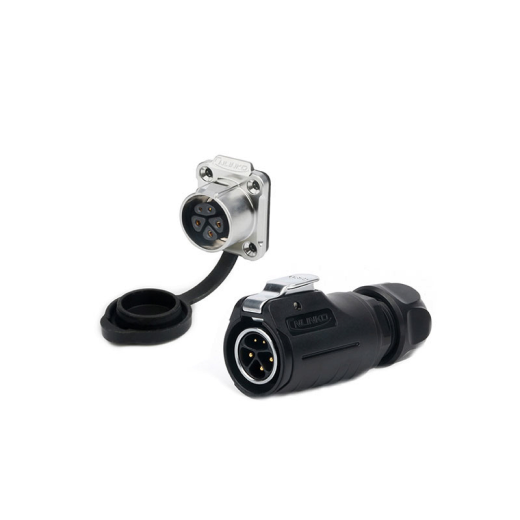
For soldered applications, CNLINKO BD24 Series Industrial-Grade Connectors use a split locking structure designed to reduce the risk of internal components becoming loose or misaligned during soldering and assembly, helping improve batch-assembly stability.
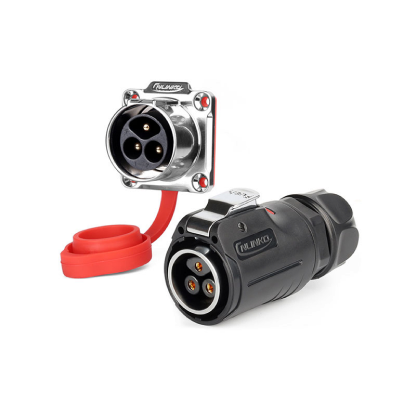
For crimped applications, CNLINKO LP32 Series Industrial-Grade Connectors support 10/16 mm² large-gauge crimp termination. CNLINKO’s internal quality validation focuses on crimp height, terminal pull-out force, and post-crimp contact resistance to support consistent high-current connections.
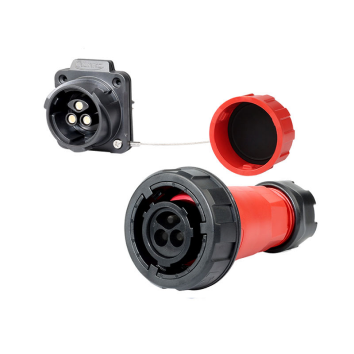
For screw-terminal applications, CNLINKO DL28 Series Industrial-Grade Connectors are rated at 50 A, support 10-16 mm² (8-6 AWG) conductors, and use screw termination, making them suitable for field wiring in energy storage, laser systems, and other high-power equipment. Termination reliability focuses on terminal torque, cable pull, and contact stability before and after vibration.
According to CNLINKO laboratory testing under specified conditions, termination reliability for CNLINKO DL28 Series Industrial-Grade Connectors is validated through terminal torque, cable pull, contact resistance, and related tests to support secure termination, low connection loss, and long-term stable operation in 50 A high-current equipment.
Accordingly, the choice among solder, crimp, and screw-terminal termination should be based on wire size and current, production method, vibration conditions, and maintenance requirements rather than simply comparing which termination method appears mechanically stronger.