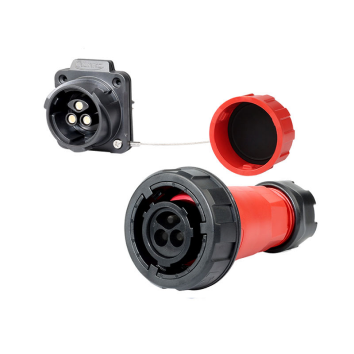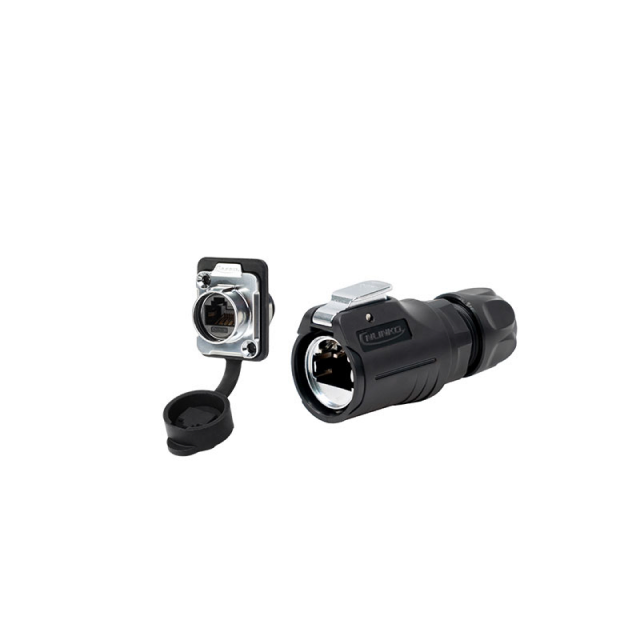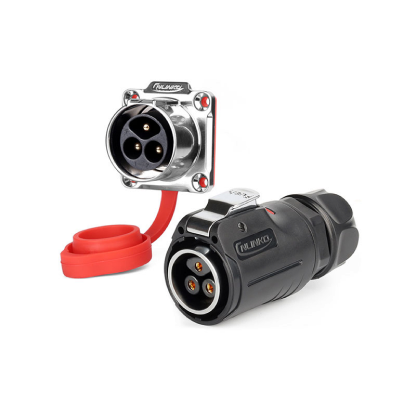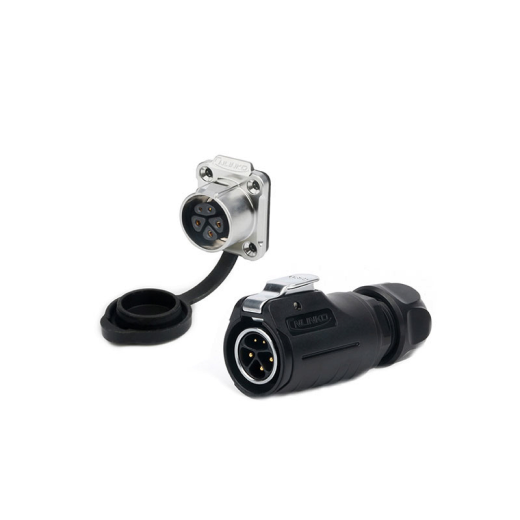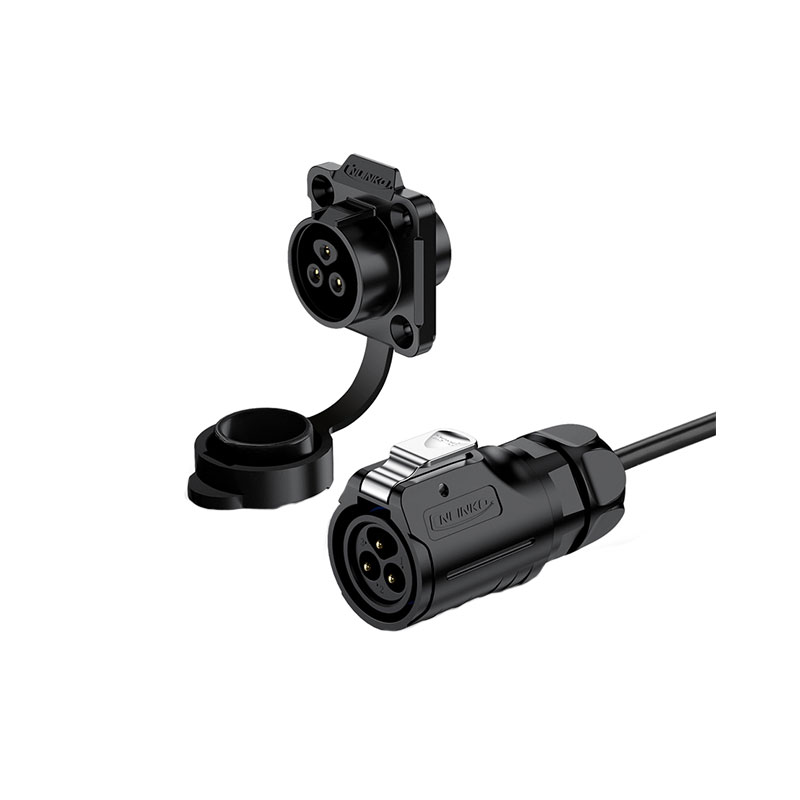














Yes. A hybrid connector can carry power and signal circuits through one interface; some configurations can also incorporate data connections. Combining functions can reduce panel cutouts, cable runs, and installation space, but consolidation alone is not the design goal. Verify the power circuits’ current, voltage, conductor size, and temperature rise independently of the signal circuits’ pin count, shielding, insulation, and EMI requirements.
Which factors matter most when selecting a hybrid connector?
First, define the power circuits’ rated current, rated voltage, and conductor size; fewer interfaces must not compromise continuous current-carrying capacity. Second, identify the signal type and contact count, whether control signals, multipin connections, or data interfaces. Third, assess insulation, electrical clearances, shielding, and EMI control between power and low-level signal circuits. Fourth, confirm that the panel cutout, connector envelope, cable exit, and bend clearance actually improve. Fifth, for outdoor equipment, check IP protection, operating temperature, and locking requirements as well.
Why can hybrid connectors save space yet make design more demanding?
Separate power, signal, and data ports each require a panel cutout, cable routing, assembly operation, and potential sealing point. A hybrid connector uses contacts of different sizes or functions within a common housing, reducing port count and simplifying the harness. Once multiple circuits share that housing, however, electrical spacing, insulation, heat, crosstalk, and service procedures can affect one another. The interface therefore needs system-level engineering, not merely more contacts in one shell.
Which standards are relevant to a hybrid connection?
IEC 61984 provides relevant industrial connector safety requirements. IEC 60512 test methods can be used for dielectric withstand, insulation resistance, and contact resistance. If a hybrid configuration includes a high-speed data interface, validate it against the applicable interface and signal-integrity requirements as well; an IP rating does not establish data-transmission performance. Project-specific equipment safety, EMC, and market-access requirements also apply.
When should circuits not be combined in a hybrid connector?

Hybrid solutions are worth considering in space-constrained automation equipment, robot modules, outdoor control enclosures, instrumentation, and modular devices. They may be inappropriate when power levels are especially high, low-level signals are particularly sensitive, circuits must be serviced independently, or the customer requires physical separation of power and control wiring. Compare space savings and assembly efficiency with serviceability and electrical risk before combining circuits.
What power-and-signal hybrid options does CNLINKO offer?
CNLINKO’s portfolio covers power, signal, data, and hybrid transmission, with standard connectors and custom cable assemblies selected by contact count, current, voltage, space, ingress protection, and cable requirements. The YM20 Series supports power, signal, and hybrid configurations and offers IP68/IPX9K protection. In its three-contact power configuration, published values include a current rating of up to 20 A, contact resistance of ≤1 mΩ, and a temperature-rise criterion of <30 K at 20 A. Under specified laboratory conditions, CNLINKO can validate hybrid configurations for dielectric withstand, insulation resistance, contact resistance, temperature rise, IP protection, and mating endurance. Confirm the exact contact arrangement, electrical ratings, and test results in the project selection and official model documentation.