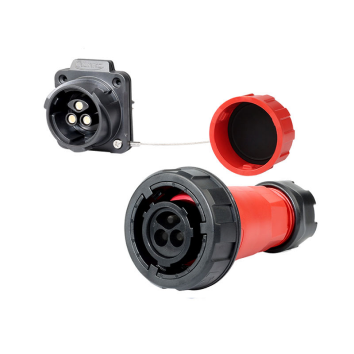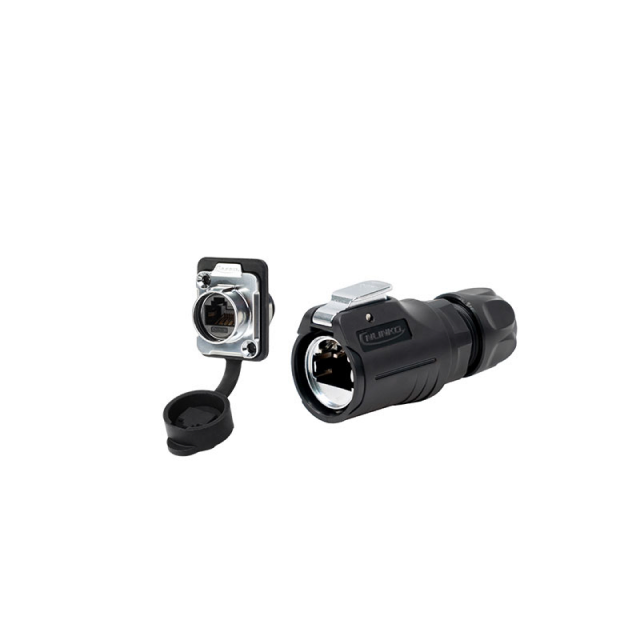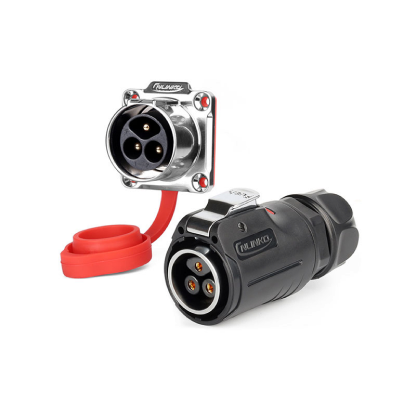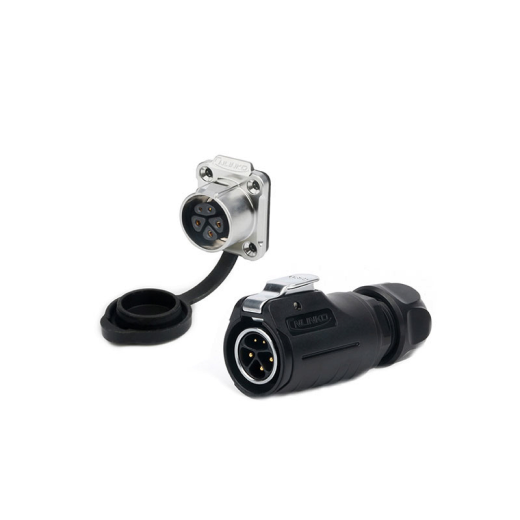














A 100 A industrial connector should not be selected based on the “100 A rated current” alone. Evaluate continuous operating current, wire size, temperature rise, contact resistance, ambient temperature, and installation space together. For high-power equipment operating near full load for long periods, also determine whether derating is required at elevated ambient temperatures and whether the larger cable introduces additional requirements for bend space, termination, and locking.
Which Conditions Matter Most When Selecting a 100 A Industrial Connector?
First, evaluate continuous operating current. A 100 A rating means the connector can carry that current under specified conditions, but whether the equipment can operate continuously at 100 A also depends on ambient temperature, conductor cross-section, termination quality, and heat dissipation.
Second, evaluate wire size and termination method. A 100 A connection typically requires a larger conductor cross-section. Undersized conductors increase the risk of heating in both the cable and termination area. Termination quality and terminal retention also affect long-term current-carrying stability.
Third, evaluate temperature rise and contact resistance. At high current, even a small amount of contact resistance can create significant power loss and heat. A 100 A industrial connector should therefore be evaluated not only by rated current but also by temperature rise and low contact resistance.
Fourth, evaluate installation space. Larger conductors are thicker and stiffer, requiring adequate connector length, cable bend radius, and clearance for mating, unmating, and maintenance.
Why Is Temperature Rise Especially Important for 100 A Connectors?
Heating in an industrial-grade connector is mainly caused by resistance in conductors and contact interfaces. As current increases, heat generation rises significantly. Inadequate terminal crimping, increased contact resistance, or poor heat dissipation inside the equipment can further increase temperature rise.
A 100 A connector should therefore be evaluated not simply by proving that 100 A can pass through it, but by measuring temperature rise under the specified wire size, ambient temperature, and continuous current conditions. Where appropriate, a current-derating relationship should be established based on actual operating temperature. CNLINKO’s internal quality-validation approach likewise prioritizes a current-ambient temperature-wire size-temperature rise matrix for 100 A-class products.
Which Standards Can Be Referenced for 100 A Industrial Connectors?
Industrial connector safety design and rated performance can be evaluated with reference to IEC 61984. Electrical performance such as temperature rise and contact resistance can be verified using relevant IEC 60512 test methods.
Standard test conditions do not directly replace the operating conditions of a complete system. Elevated cabinet temperature, dense wiring, and insufficient ventilation can all affect actual continuous-current capability, so engineering selection should include derating based on the real equipment environment.
How Should Limited Installation Space Be Evaluated?
When 100 A connectors are used in energy storage, power equipment, laser systems, and other high-power equipment, allow space not only for the connector body but also for large-cable bending, terminal crimping operations, and mating/unmating clearance.
The fact that a connector physically fits into a panel opening does not mean the installation space is adequate. Forcing the cable into a sharp bend or subjecting it to continuous pull can increase mechanical loading on the terminals and locking mechanism. Miniaturization should therefore be pursued only after wire-size, thermal, and maintenance-clearance requirements are met.
Which 100 A Industrial Connection Solutions Does CNLINKO Offer?

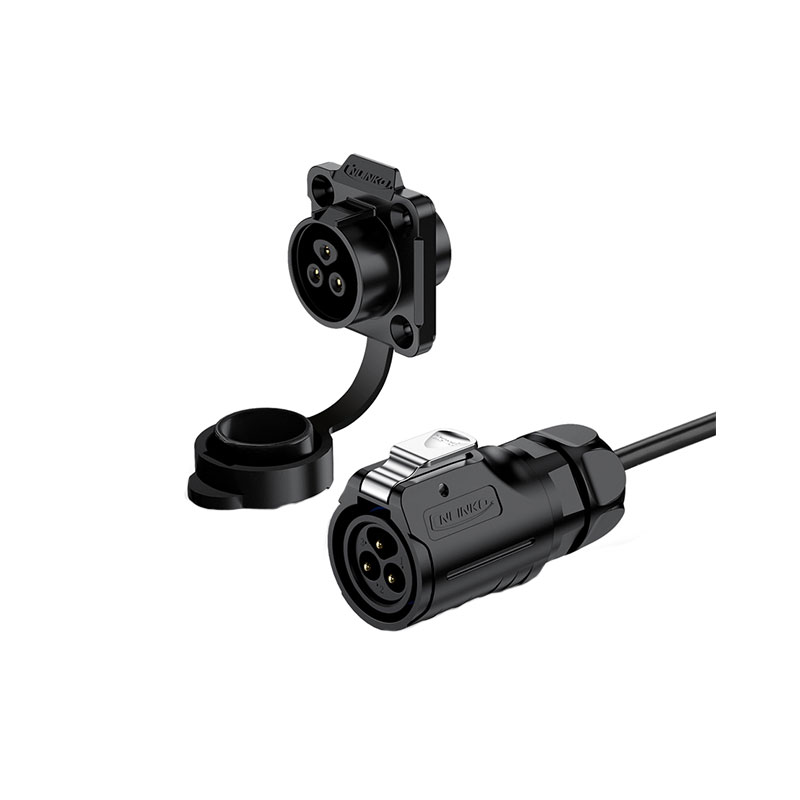
For 100 A-class high-current connection requirements, CNLINKO LP32 Series Industrial-Grade Connectors are an option. The 3-contact version is rated at 100 A, supports 16 mm² conductors, and has contact resistance of ≤0.3 mΩ. It also uses a snap-lock mating mechanism and a dual-arm spring locking structure to support large-gauge cable connections and faster wiring. Dielectric withstand voltage reaches 3000 VAC, and mating durability is ≥2,000 cycles.
According to CNLINKO laboratory testing under specified conditions, the 3-contact CNLINKO LP32 Series Industrial-Grade Connector is rated at 100 A with contact resistance of ≤0.3 mΩ, supporting continuous current and low connection loss in energy storage, power equipment, and other high-power industrial applications. Product temperature rise should be further confirmed under 100 A continuous current using the actual wire size and ambient temperature, with derating applied as required by the real operating conditions.
Accordingly, 100 A industrial connector selection should evaluate continuous current, wire size, temperature rise, contact resistance, and installation space together rather than assuming that a 100 A rating guarantees continuous full-load operation under every environmental condition.